How Naming Choices Influence Click-Through Rates
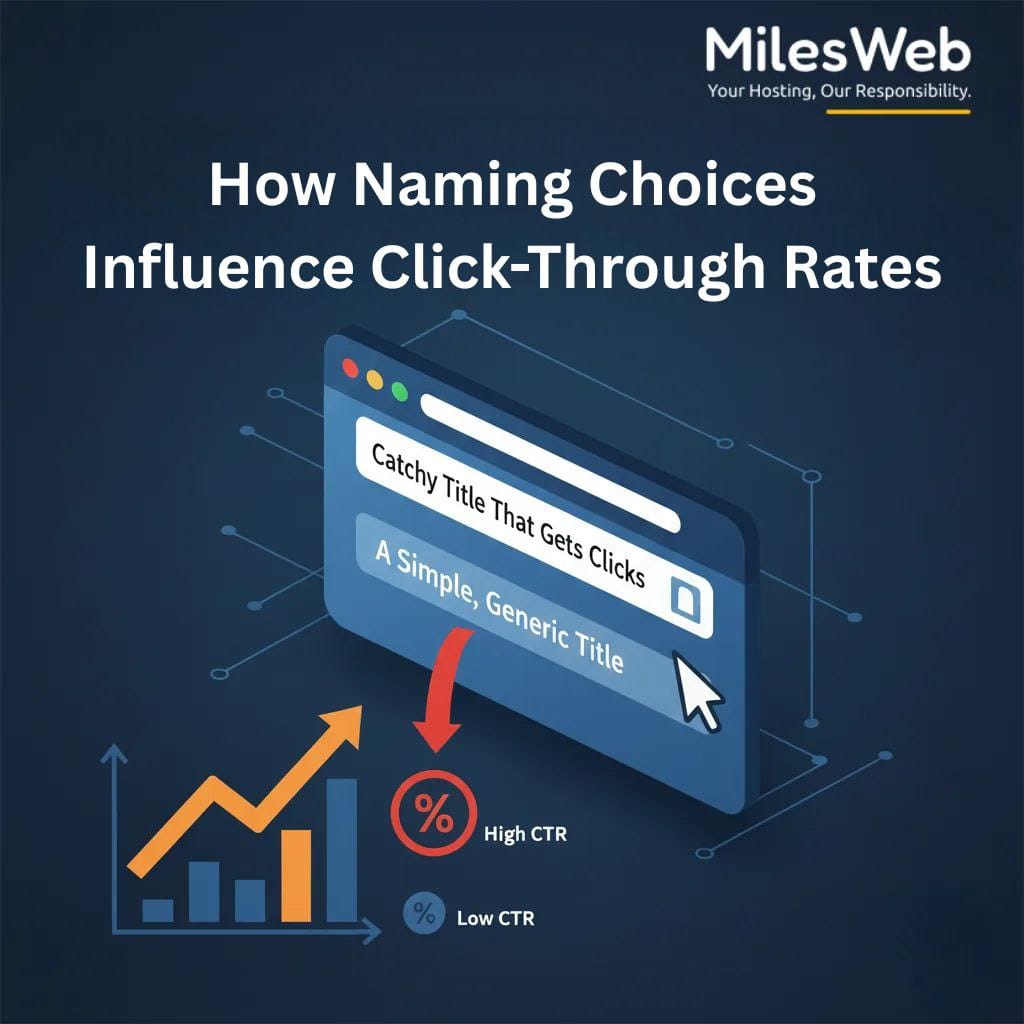
What if the click rate increases over 200% without changing the budget, target audience, or platform? The secret sauce is the language psychology, and not the complex algorithms of search engines. Ignore their power, and you’re leaving clicks (and revenue) on the table. The digital space is flooded with crowded ads, search results, and notifications; your name is the first thing users notice.
Naming is the gateway to engagement, whether it’s the cheapest domain name, brand, page title, or email sender line. That single line of text affects the crucial moment when users decide to click or scroll past. Design and offers play a role, but it’s the clarity and confidence expressed by a name that ultimately influences click-through rates (CTR).
Brand names shape perception before content loads. Confusing, generic, or clever names reduce trust and relevance with the right expectations instantly. Businesses understand the connection and consistently see better engagement across search engines, emails, ads, and social platforms.
Clarity Beats Creativity When Users Decide to Click
Creative names may sound impressive internally, but users want simple, and transfer domain names when necessary. When a name instantly communicates what the business or page is about, users feel confident to click. If clarity is lacking, hesitation, and missed clicks follow. Clear naming removes unnecessary decision friction.
When users see a name associated with a particular goal, sector, or benefit, they are able to quickly appreciate its relevance and gain confidence to click on a result. Visibility over cleverness in competitive spaces, such as Google Inbox or Search, is preferred.
Instant Trust from Familiar Terms
Users tend to click on names that feel familiar, are recognizable, and are easy to read. The comfort that comes from simple vocabulary or industry-standard terms is appreciated. A level of trust is built as users associate name familiarity with legitimacy and professionalism.
Words that aim to be unique by using random abstracts or forced abbreviations collectively create a higher level of cognitive load on users of the name. The greater the amount of mental effort required to decode a name, the lower the click-through rate will be. Users are enabled to move quickly from passive observation to click action when familiar language is used.
Relevance Signals Improve Search and Ad Performance
Search engines and advertising systems reward relevance. Names that align with the keywords users search for are more likely to succeed in the search and in the sponsored results. When the name matches the user’s queries, it stands out and looks and feels correct.
For instance, descriptive brand or page names enhance headline relevance in Google Ads and organic results. It boosts CTR because users trust results that mirror their intent. Relevance doesn’t just help rankings; it directly impacts clicks.
Users Are More Focused on Short Names
Mobile users need to glance quickly and have low attention spans. Lengthy and complicated names will likely get cut off in search results, advertisements, and even emails. Short scannable names get the message across.
Users who scroll quickly will see brief names as visual anchor points. Engaging text that quickly gets to the message will be processed and retained. Names that will fit neatly into documents will have greater visibility, along with the probability of points across platforms.
Words Are on Autopilot, Actions Are Influenced
Names are also used as triggers to motivate users. Names that signify reliability, speed, security, or growth will prompt users to take action. Emotional anchoring is vitally important to make the users feel like you have the solution to their pain points.
Identifying names that are muted to the user and the space will lag behind. Authority and knowledge are the names that trigger emotions. On brief occasions, emotional connection can drive up confidence, along with curiosity, to elevate the CTR.
Using the Same Names Builds Recognition
Users are more likely to click on something they have seen across multiple platforms. It is important to have consistent naming across digital and social campaigns for the best recognition. Familiar names give off a sense of security and reduce hesitation to click.
Gradually, consistency builds the brand recall value. Users do not just click because of the relevancy, but also remember those positive interactions in the past. Because of the compounding effect, naming is more than just a one-time decision but rather a long-term CTR growth asset.
Key Stats
Length of Title/Name
- Headlines that are 6–10 words long typically have 21% higher CTR than titles that are shorter or longer, and these also tend to be the ones that generate the highest CTR.
- Long titles (15+ words) can suffer from a 17% reduced CTR as a result of truncation in the search results.
Use of Numbers
- CTR is 36% higher in titles that have numbers (i.e., “7 Tips for Hosting”) than in titles that have no numbers.
- Odd numbers are more frequent than even numbers by 20%, as they tend to have a more realistic feel.
Power Words & Emotional Triggers
- CTR is increased by 14–18% in names that have emotional words such as “best,” “ultimate,” or “free.”
- In some industries, negative framing (“Don’t make this mistake”) can outperform positive framing by as much as 30%.
Brand Mentions
- In more competitive niches, CTR is increased by 24% if the title has a recognizable brand name.
- But excessive brand repetition can detract from CTR by 10–12% as a result of perceived bias.
Clarity and Curiosity Merged Together
- Vague names are outperformed by clear and descriptive ones by 22%, and curiosity-driven names like “You Won’t Believe” can spike socially driven CTR by around 40%.
- Curiosity-based clickbait has a 15% reduction in return visits.
Keyword Rank
- If the primary keyword is within the title’s first three words, CTR improves by 18%.
- Average CTR diminishes by 11% with the end of the name/title keywords.
Personalization
- Titles using “you” or “your” increase CTR by 9–12%, as they feel directly relevant.
- Hyper-specific personalization (e.g., location-based names) can raise CTR by 20% in targeted campaigns.
Conclusion
Naming choices shape the user behaviour at every consumer touchpoint on the website. A clear brand name increases trust for different digital assets like email inboxes and others. It increases the click-through rates. Businesses naming the strategic decision consistently outperform those that treat it as an afterthought.
Users don’t click on vague terms or the CTA elements in this cluttered digital space. The right brand name guides users to the content and product/service category they browse. When naming aligns with user intent, CTR naturally follows.