How High-Availability Architecture Reduces Revenue Loss
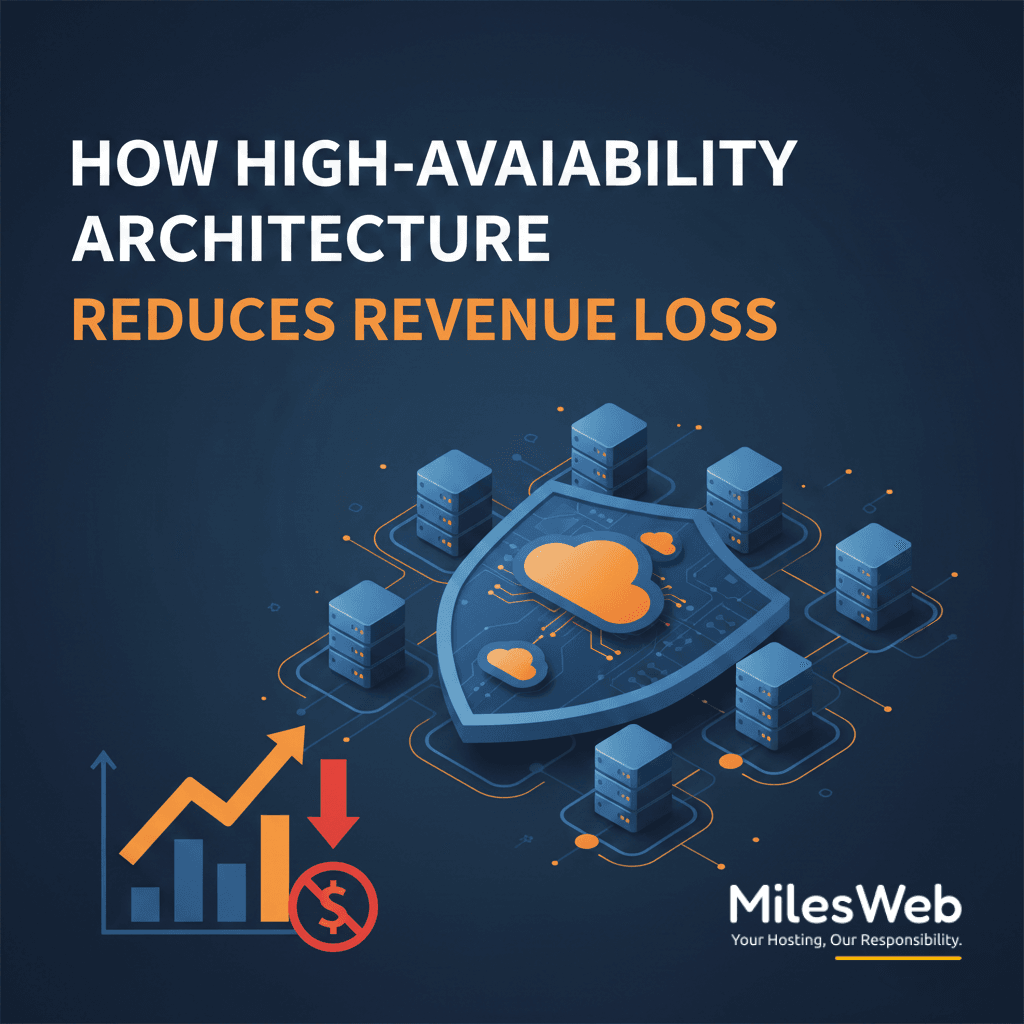
In today’s digital-first economy, downtime impacts the total business revenue. Whether it is an eCommerce store, SaaS platform, or content-driven website, minimal lag time results in lost sales and cart abandonment. Consumers expect websites and applications to be accessible 24×7, and failure to meet the expectations pushes them straight to competitors. Cloudbased hosting providers offer servers with HA to ensure no performance bottlenecks.
High availability (HA) architecture is designed to prevent exactly this scenario. Instead of relying on a single server or point of failure, HA systems distribute the workloads across multiple components that work together seamlessly. When one component fails, another takes over quickly. Such behind-the-scenes resilience plays a crucial role in revenue protection, consumer experience, and business continuity.
Impact of High Availability Architecture on Reduced Revenue Loss
Eliminates Single Points of Failure
One of the major reasons for revenue loss is relying on a single server or system. If any of its components crash due to hardware failure, software bugs, or network issues, the entire system shuts down. High availability architecture removes the workload distribution risk by allocating resources across multiple servers or nodes. It reduces the operational cost by investing in plans having the right cloud server cost in India.
Redundancy of infrastructure implemented in all layers makes it invisible to end users. Traffic redirection is automatically made to operational resources to prevent disruption. As a result, it continues with sales transactions and user sessions, as well as irreversible data processing, thus avoiding international direct revenue loss due to unavailability.
Keeps E-Commerce and Transactions Running During Failures
In business organizations that conduct business online, being unable to operate because of an outage in the middle of traffic is a huge problem. A short-term outage at a certain sale or campaign will cause losses of thousands or millions of dollars in revenue. The high-availability system is a system in which the transaction engine is resilient to infrastructural failure.
Load balancers, replicated databases, and failover systems are some elements of HA that maintain the checkout flows and hassle-free payment process. Consumers complete smooth purchases, carts don’t get abandoned due to errors, and revenue streamlines even during the infrastructural problems.
Protects Brand Trust and Customer Loyalty
Revenue loss is not spontaneous. When users experience frequent downtime, slow responses, or service interruptions, trust erodes gradually. Consumers always have the memory of unreliable experiences that rarely return. High availability architecture maintains consistent uptime and reinforces reliability in the consumer’s mind.
A platform that is constant and reliable breeds trust. As long as the users feel that your service is reliable, they will stay as customers, renew subscriptions, and refer others to the business. The long-term trust has a direct impact on the lifetime customer value and generates recurrent revenue.
Lessens Operational Chaos in Infrastructure Problems
Lack of increased availability leads to emergency mechanisms, manual reboots, quick fixes, and reactive troubleshooting in response to system failures. This increases stress levels, extends recoveries, and distracts teams on revenue-generating missions. Any minute spent correcting outages is a minute wasted in customer service.
High-availability architecture automates through server health, failovers, and self-healing systems. Without downtime or manual intervention, issues are resolved automatically. Faster recovery means fewer lost users, fewer refunds, and better protection against revenue loss.
Ensures Performance Stability During Traffic Surges
Revenue and traffic spikes come along together. Flash sales, marketing campaigns, product launches, or seasonal demand lead to a traffic surge. Without HA architecture, sudden load increases overwhelm servers, slow down performance, or crash applications. It leads to lost conversions and frustrated users.
A high-availability system distributes traffic proportionally to each server, preventing overload on a particular component. Even during the extreme demand, websites are responsive and fast. This performance stability ensures your business captures maximum revenue when traffic and opportunity are at their highest.
Supports Compliance and SLAs That Protect Revenue Contracts
Most companies have service level agreements or regulatory constraints that force them into a high uptime. Not meeting these goalposts can result in sanctions, repayments, and termination of contracts, which directly hit the bottom line. High availability design means high levels of uptime are achieved and surpassed.
With redundancy and constant monitoring with automatic failover, HA systems decrease the likelihood of failing SLAs. This not only ensures your current customers don’t disappear, but it also gives you the muscle to win enterprise customers with SLAs.
Conclusion
High-availability architecture isn’t just a good idea; it’s a financial investment. With HA systems helping to cut out downtime during traffic spikes while also guaranteeing instant recovery from outages, the revenue impact is felt not just in immediate loss but also in longer-term customer churn. Each layer of redundancy gives you that much more resilience to keep your business running when it counts.
In today’s competitive digital environment, reliability is a revenue strategy. High availability is something that businesses pay for and never use because of how much they value uptime, so trust and stability are also key components to the success stories here. The outcome is reduced downtime, happier customers, and steady revenue even under pressure.